Back Pain in Women — Why It Keeps Coming Back and How to Actually Fix It
Written by the Pelvicare Editorial Team
Medically reviewed by Dr. Sunita Patel (PT)
Founder, Pelvicare Health | Pelvic Floor Physiotherapist & Trainer
Last reviewed: April 2026
You've tried rest. You've tried painkillers. Maybe even a general physiotherapist.
And yet the pain keeps returning.
If back pain has become your constant companion — through pregnancy, after delivery, or just quietly building over years — there's likely more going on than a muscle strain. And you deserve care that looks at the whole picture.
Why Women's Back Pain Is Different
Back pain in women is frequently connected to the pelvic floor, hormonal changes, and life stages that men simply don't experience — pregnancy, postpartum recovery, perimenopause, menopause.
When the pelvic floor is weak, tight, or uncoordinated, the lower back compensates. It takes on load it was never meant to carry. The result is pain that keeps coming back — because the actual cause is never addressed.
This is why general back treatment often gives only temporary relief for women. Treating the spine without assessing the pelvic floor is like fixing one leg of a broken chair.
What Could Be Causing Your Back Pain
- Pregnancy-related back pain — the weight and hormonal changes of pregnancy shift your posture, loosen your ligaments, and strain your lower back. Many women are simply told to rest and wait.
- Postpartum back pain — carrying, feeding, and lifting a newborn in a body that hasn't fully recovered is a recipe for persistent pain. Diastasis recti — abdominal separation — is a common hidden contributor.
- Pelvic floor dysfunction — a weak or tight pelvic floor directly affects spinal stability. If your deep core system isn't working properly, your back muscles overwork to compensate.
- Tailbone pain (coccydynia) — pain at the base of the spine, often after delivery or a fall, that makes sitting unbearable. This is a separate condition but often confused with general back pain.
- Sciatica — shooting pain down the leg, often originating in the lower back or pelvis. Common during pregnancy and postpartum.
- Postural pain — years of desk work, poor ergonomics, or compensating for pelvic floor weakness create chronic muscular imbalances that show up as back pain.
- Menopause-related changes — falling oestrogen affects bone density, joint mobility, and tissue elasticity — all of which contribute to back pain in midlife women.
Does This Sound Like You?
- Back pain that returns no matter what you try
- Pain that gets worse during your period
- Back pain that started during or after pregnancy and never fully resolved
- Stiffness and aching after sitting or standing for long periods
- Pain that travels into your hips, buttocks, or down your legs
- Back pain accompanied by bladder leakage, pelvic heaviness, or pelvic pain
If you're nodding — your back pain deserves a proper women's health assessment, not just a generic treatment plan.
Find a Women's Health Physiotherapist →
How Pelvicare Treats Back Pain in Women
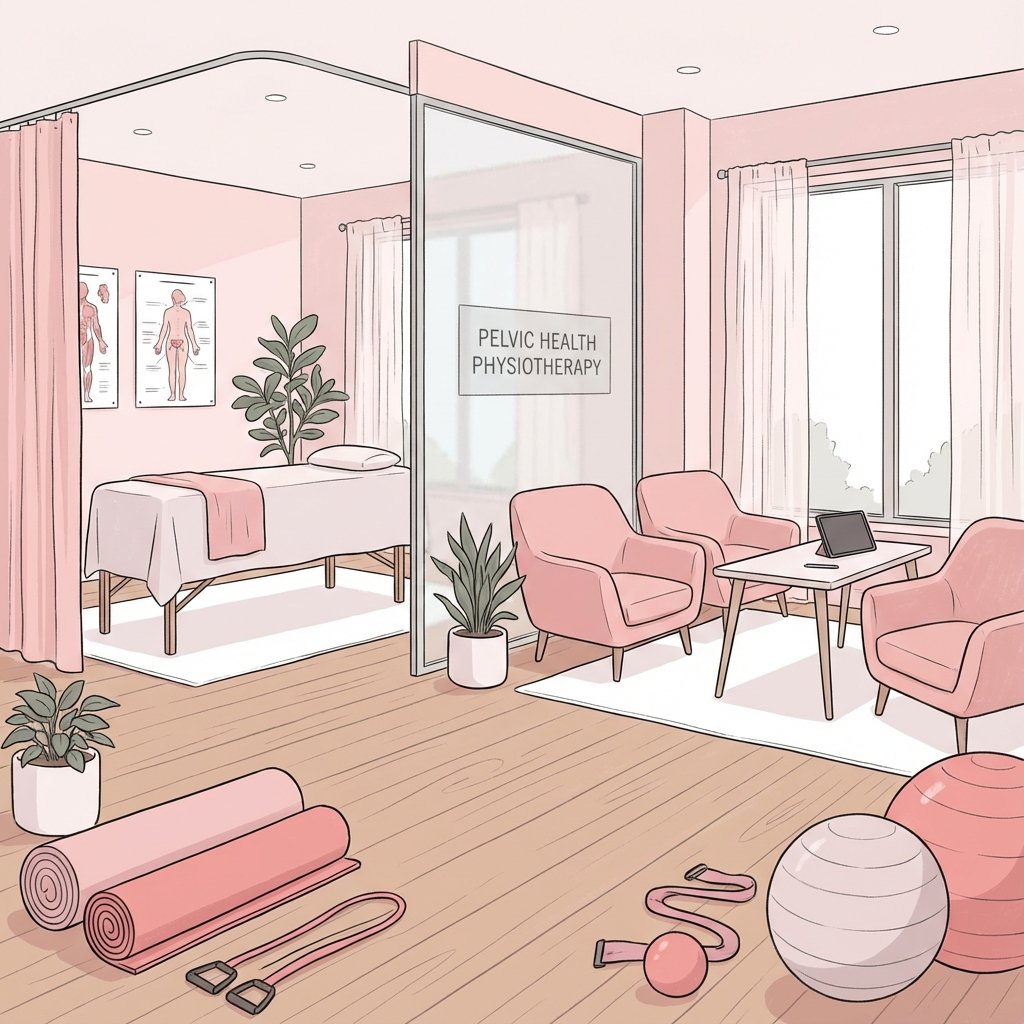
At Pelvicare, back pain is never treated in isolation. Your specialist looks at the full picture — your pelvic floor, your core, your posture, your life stage, and your daily movement patterns.
Treatment may include:
- Pelvic floor assessment and rehabilitation — identifying whether a weak or tight pelvic floor is contributing to your back pain
- Core reactivation — rebuilding the deep abdominal and spinal muscles that support your lower back
- Manual therapy — hands-on treatment to release tight muscles, joints, and scar tissue
- Postural retraining — correcting the compensatory patterns your body has developed around the pain
- Movement coaching — learning how to lift, carry, sit, and move in ways that protect your spine
- Pregnancy-specific support — safe, targeted treatment for pregnancy-related back pain and pelvic girdle pain
- Postpartum rehabilitation — addressing back pain alongside postpartum recovery for a complete return to function
Most women notice meaningful improvement within 4 to 6 weeks of the right, targeted treatment.
What the Research Shows
- Back pain is the most common musculoskeletal complaint in women across all age groups in India
- Up to 70% of pregnant women experience back pain during pregnancy — yet fewer than 25% receive physiotherapy treatment
- Pelvic floor dysfunction is present in up to 95% of women with chronic low back pain (Journal of Urology)
- Women who receive pelvic floor physiotherapy alongside back treatment have significantly better long-term outcomes than those who receive back treatment alone
Back Pain Treatment Across India
Pelvicare has verified women's health physiotherapists treating back and musculoskeletal pain across:
Delhi NCR — South Delhi, Gurgaon, Noida, Dwarka, Faridabad. In-person and online. Mumbai — Bandra, Andheri, Powai, Thane, Navi Mumbai. In-person and online. Bangalore — Koramangala, Indiranagar, Whitefield, HSR Layout, Jayanagar. In-person and online. Pune — Baner, Kothrud, Viman Nagar, Aundh, Koregaon Park. In-person and online.
Online consultations available for women across all cities in India.
Find a Specialist in Your City →
Also explore related conditions:
- Tailbone Pain (Coccydynia) →
- Sciatica →
- Pelvic Girdle Pain During Pregnancy →
- Postpartum Recovery & Rehabilitation →
- Pelvic Pain Management →
- Diastasis Recti Rehabilitation →
Questions Women Ask About Back Pain
Is back pain during pregnancy normal? Back pain is extremely common in pregnancy — but it is not something you simply have to endure. Pelvic girdle pain, sciatica, and postural back pain all respond well to physiotherapy during pregnancy. Early treatment prevents symptoms from worsening and supports a more comfortable labour. Explore pregnancy care →
Why does my back pain keep coming back after treatment? Recurring back pain in women is often a sign that the root cause — pelvic floor dysfunction, core instability, or postural imbalance — hasn't been addressed. A women's health physiotherapist assesses all of these together rather than treating only the site of pain.
Can back pain be related to my pelvic floor? Yes — and this connection is one of the most underrecognised in women's health. The pelvic floor, deep abdominal muscles, diaphragm, and spinal muscles work as a coordinated system. When one fails, the others compensate — and the back is often the first place that compensation shows up as pain.
Is back pain after delivery normal? Very common — but not something to normalise indefinitely. Postpartum back pain is frequently linked to diastasis recti, pelvic floor weakness, and the physical demands of caring for a newborn. Postpartum rehabilitation addresses all of these together.
Can I exercise with back pain? Yes — with the right guidance. Movement is generally beneficial for back pain, but the type and intensity matter enormously. Your Pelvicare specialist will guide you on safe, progressive movement that supports recovery rather than worsening pain.
Where can I find a women's back pain specialist in India? Pelvicare has verified specialists in Delhi NCR, Mumbai, Bangalore, and Pune — with online consultations available across all of India. Find a specialist →
Your Back Has Carried Enough
It has carried you through pregnancy, through delivery, through the daily demands of being a woman.
It deserves care that actually understands what it's been through.
Find a Women's Health Physiotherapist Near You →
Medically reviewed by Dr. Sunita Patel (PT), Founder, Pelvicare Health | Pelvic Floor Physiotherapist & Trainer. Last reviewed April 2026.
Pelvicare connects women across Delhi NCR, Mumbai, Bangalore, Pune, and all of India with verified women's health physiotherapists specialising in back pain, pelvic floor care, and postpartum rehabilitation.
Other Back & Musculoskeletal Pain in Women treatments
Ready to Take the Next Step?
Schedule a consultation to discuss your specific needs.
Book Appointment