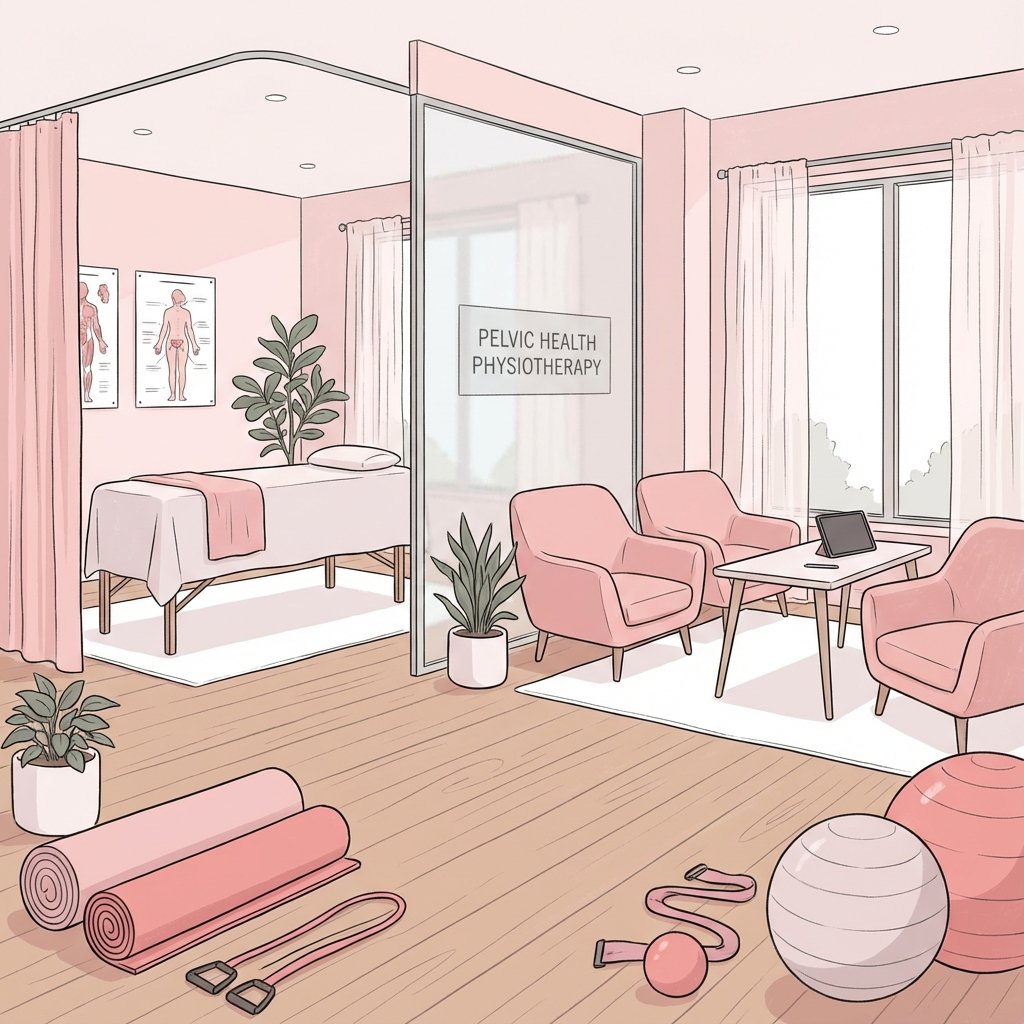
Pelvic Floor & Bladder Health

Weak pelvic floor

Book Appointment
Weak pelvic floor

Weak Pelvic Floor in Women: Why You Leak When You Laugh, Feel Heavy Down There, and What Actually Fixes It


Medically reviewed by: Dr. Sunita Patel, Pelvic Floor Physiotherapist, Pelvicare Health

Last reviewed: June 2026

Reading time: 14 minutes


Does Any of This Sound Familiar?

You leak a little when you sneeze — or laugh hard — or jump at the gym. You've quietly started wearing a pad every day "just in case." You've stopped certain exercises because you're not sure you'll make it through without embarrassing yourself.

Since your baby was born, something feels different "down there" — a heaviness, a fullness, a vague sense that things are not where they should be. Sex doesn't feel the same. You haven't told anyone.

You've been told this is normal after having a baby. That it happens to everyone. That it's just part of getting older.


None of that is true.

Leaking, heaviness, and changed sensation after childbirth are signs of pelvic floor weakness. They are not inevitable, they are not permanent, and they are not something you have to quietly accept. They are a muscle problem — and muscles can be rehabilitated.

At Pelvicare Health, we treat weak pelvic floor as the clinical condition it is, not a fact of life. This page tells you everything you need to know: what a weak pelvic floor actually is, every symptom it causes, why kegel exercises alone often aren't enough, and what real treatment looks like.

Quick Navigation


What Is the Pelvic Floor and What Does It Do?

The pelvic floor is a group of muscles, ligaments, and connective tissue that forms a hammock-like base across your pelvis. It attaches from the pubic bone at the front to the tailbone at the back, and from one sitting bone to the other on either side.

Despite occupying a relatively small area, the pelvic floor is responsible for an extraordinary range of functions:


Bladder control: The pelvic floor keeps the urethra closed between visits to the toilet. Every time you cough, sneeze, laugh, jump, or lift anything heavy, pressure surges through your abdomen. The pelvic floor contracts reflexively in that fraction of a second to prevent leakage.


Bowel control: The same muscles control the anal sphincter — preventing leakage of stool and gas between visits to the toilet.


Pelvic organ support: The pelvic floor holds the bladder, uterus, and rectum in their correct anatomical positions. When it weakens, these organs can descend — a condition called pelvic organ prolapse.


Sexual function: The pelvic floor muscles surround the vaginal canal. Their tone, strength, and ability to contract and relax directly affect sensation during sex, the strength of orgasm, and the experience of penetration.


Core stability: The pelvic floor works as the base of your deep core system, alongside the diaphragm, deep abdominal muscles, and deep back muscles. Weakness here affects posture, back stability, and hip function.


A healthy pelvic floor is not just strong — it is coordinated. It contracts when it needs to (during a sneeze), relaxes when it needs to (during urination, bowel movement, and childbirth), and maintains appropriate resting tone at all other times.


Signs and Symptoms of a Weak Pelvic Floor

Pelvic floor weakness does not produce one single obvious symptom. It produces a constellation of symptoms across bladder, bowel, pelvic, and sexual function — that most women never connect to a single underlying cause.


Bladder symptoms:

  • Leaking urine when coughing, sneezing, laughing, jumping, running, or lifting (stress incontinence)
  • Sudden, urgent need to urinate that is difficult to control (urge incontinence)
  • Leaking urine before reaching the toilet
  • Needing to visit the toilet frequently (more than 8 times per day)
  • Waking more than once per night to urinate


Bowel symptoms:

  • Difficulty controlling wind or leaking stool
  • Urgency to reach the toilet for a bowel movement
  • Constipation and straining during bowel movements (can be both cause and consequence of pelvic floor weakness)


Pelvic symptoms:

  • A feeling of heaviness, dragging, or pressure in the pelvis — particularly at the end of the day or after standing for long periods
  • A sensation of something coming down or bulging in the vaginal area
  • Lower back pain and hip pain that do not improve with standard physiotherapy
  • Pelvic pain or discomfort during or after physical activity


Sexual symptoms:

  • Reduced sensation or a "looser" feeling during penetrative sex
  • Reduced strength or absence of orgasm
  • Pain during intercourse (can occur with both weak and tight pelvic floor)
  • A sense that "things feel different" down there since having a baby

If you experience any combination of the above — even mildly — your pelvic floor is involved and is worth assessing.


Why Do I Leak When I Laugh, Sneeze, or Cough?

This is called stress urinary incontinence (SUI) — and it affects an estimated 1 in 3 Indian women over 35, with the rate rising significantly after vaginal delivery.


The word "stress" here does not mean emotional stress. It means physical stress — any increase in pressure inside the abdomen. Every time you cough, sneeze, laugh, jump, or run, your diaphragm and abdominal muscles generate a sudden downward pressure spike. This pressure travels directly onto the bladder.


In a person with a strong pelvic floor, the muscles react in a fraction of a second, contracting and closing the urethra before the pressure arrives. The response is automatic and completely unconscious — you do not have to think about squeezing, it just happens.


In a person with weak pelvic floor muscles, that reflex contraction is too slow, too weak, or simply doesn't happen. The pressure overwhelms the urethra's ability to stay closed, and urine escapes.


Why does this happen more after childbirth?

During vaginal delivery, the pelvic floor muscles are stretched to 3–4 times their resting length to allow the baby to pass through. The muscles, fascia, and nerves in this area are all significantly stretched and potentially damaged in the process. Even after a straightforward delivery, the nerve supply to the pelvic floor takes 6–12 weeks to fully regenerate — which is why symptoms of weakness are often worst in the first 3 months postpartum.


Why does exercise make it worse?

High-impact activities — running, jumping, HIIT, aerobics — generate the highest pressure spikes of any daily activity. Women who experience leakage only during exercise may have adequate pelvic floor function for daily life but not enough reserve strength for high-impact loading. This is very common and very treatable, but requires a specific progressive loading rehabilitation programme — not just standard kegel exercises.


Will it get better on its own?

Some mild stress incontinence does improve in the first 3–6 months postpartum as nerve regeneration completes and oedema (swelling) resolves. However, if you are still leaking at 3 months postpartum, spontaneous improvement is unlikely without targeted rehabilitation. The same applies if your symptoms began years after delivery — waiting will not resolve weakness that has been present for months or years.


"Loose" or Changed Feeling After Delivery — What Is Actually Happening

"It just feels different down there since the baby." This is one of the most common things women say when they finally speak to a pelvic floor physiotherapist — often years after delivery.

The feeling of looseness or reduced tone in the vaginal area after childbirth is real, common, and not something women imagine. But it is almost universally framed as permanent — which it is not.


What is actually happening:

The vaginal canal is surrounded by pelvic floor muscles. During vaginal delivery, these muscles are stretched far beyond their functional range. After delivery, they may remain in a lengthened, low-tone state — not because the tissue has permanently changed, but because the muscles have not regained their normal resting tone and active strength.

This is the same as any other muscle that has been overstretched or injured — it needs rehabilitation to return to function.


What pelvic floor rehabilitation achieves:

Structured pelvic floor rehabilitation — assessed and guided by a physiotherapist — rebuilds the resting tone, active strength, and coordination of the pelvic floor muscles. Women consistently report that sensation during sex improves, the sense of looseness resolves, and their confidence in their own body returns.


An important clarification:

Not every woman who feels "different" after delivery has a weak pelvic floor. Some women develop a tight or overactive pelvic floor after childbirth — particularly following traumatic delivery, perineal injury, or significant fear around penetration postpartum. A tight pelvic floor causes pain, not looseness. Assessment is the only way to distinguish between the two — and the treatment is different.


Pelvic Heaviness and the Prolapse Connection

A feeling of heaviness, dragging, pressure, or the sensation that "something is coming out" of the vaginal area is one of the most distressing — and most underreported — symptoms of pelvic floor weakness.

These are the symptoms of pelvic organ prolapse — where the bladder, uterus, or rectum descends into the vaginal canal because the pelvic floor support structures are no longer strong enough to hold them in position.


This is not rare. Research from Northern India found a pelvic floor disorder prevalence of 56% in women surveyed — the majority of whom had never sought medical help due to social stigma and lack of awareness. Globally, up to 50% of women who have had children show some degree of prolapse on examination, many without symptoms.


Recognising early prolapse symptoms:

  • Heaviness or pressure in the pelvis that worsens through the day — particularly after standing, walking, or lifting — and improves when you lie down
  • A bulge or protrusion felt or seen at the vaginal opening
  • The sensation that you're "sitting on something" that isn't there
  • Difficulty inserting or retaining a tampon
  • Lower back ache that is worse at the end of an active day
  • Incomplete bowel emptying (bladder or rectal prolapse can obstruct normal emptying)


What pelvic floor physiotherapy can do for prolapse:

Physiotherapy is the first-line, evidence-based treatment for mild to moderate pelvic organ prolapse (Stage 1 and 2). Strengthening the pelvic floor provides increased support to the pelvic organs, reducing the degree of descent and significantly improving symptoms. Multiple high-quality studies show that supervised pelvic floor muscle training reduces prolapse severity, improves symptoms, and prevents progression.


Surgery is not the only option — and is rarely the first step. For many women, physiotherapy resolves symptoms entirely without surgery.


How a Weak Pelvic Floor Affects Your Sex Life

This is the symptom most women never raise — with anyone. Not their partner, not their doctor, not their mother. Yet changes to sexual function after childbirth or with age are extremely common and are directly connected to pelvic floor health.


Reduced sensation:

The pelvic floor muscles surround the vaginal canal. Their tone — the resting tension in the muscle — directly affects sensation during penetration. When these muscles are weak and lengthened, the friction and pressure that generate sensation during penetrative sex are reduced. Women describe this as things feeling "looser," "different," or "less satisfying" compared to before delivery.

This is not a permanent change to the vaginal tissue. It is a muscle issue — specifically, reduced resting tone in the pelvic floor. Targeted pelvic floor rehabilitation consistently improves sensation.


Reduced orgasm intensity:

The rhythmic contractions that produce orgasm are pelvic floor muscle contractions. Women with weak pelvic floor muscles often report that orgasms feel less intense, shorter, or more difficult to achieve. Strengthening the pelvic floor directly strengthens and prolongs orgasmic response. This is not widely discussed in India, but the evidence is clear and the effect of rehabilitation is significant.


Pain during intercourse:

Counterintuitively, pain during sex (dyspareunia) can be caused by either a weak or a tight pelvic floor. With a weak pelvic floor, pain is typically felt as a lack of support — an ache or pressure during deep penetration. With a tight, overactive pelvic floor, pain is felt as burning, tightness, or spasm at the vaginal entrance.

Assessment by a pelvic floor physiotherapist distinguishes between the two — which is critical, because the treatment is opposite.


Returning to sex after delivery:

Most guidelines recommend waiting 6–8 weeks after vaginal delivery before resuming penetrative sex. However, many women find that even after several months, sex is uncomfortable, different, or associated with leakage. This is not normal — it is treatable pelvic floor dysfunction, and there is no reason to simply wait and hope it improves.


What Causes Pelvic Floor Weakness?

Pelvic floor weakness is not caused by any single event. Multiple factors combine to produce the symptoms women experience:


Pregnancy: From the moment of conception, the hormone relaxin softens all ligaments and connective tissue in preparation for delivery. The pelvic floor ligaments loosen significantly. The growing weight of the baby, placenta, and amniotic fluid — which can exceed 5–6kg by the third trimester — rests directly on the pelvic floor for 9 months. This prolonged loading progressively weakens the muscles even before delivery.


Vaginal delivery: The single greatest acute stress on the pelvic floor. The muscles are stretched to 3–4 times their resting length. The pudendal nerve — the primary nerve supplying the pelvic floor — is stretched and may be partially injured. Instrumental delivery (forceps or ventouse), prolonged second stage of labour, large babies, and perineal tears increase the degree of damage significantly.


Caesarean section: C-section does not protect the pelvic floor. The pregnancy itself — 9 months of loading — has already stressed the pelvic floor. Women who labour before an emergency C-section have additional strain. Furthermore, the abdominal scar from C-section can create fascial tension that affects pelvic floor function over time.


Chronic straining and constipation: Every time you strain to pass stool, you generate significant downward pressure on the pelvic floor and stretch the support ligaments. Chronic constipation over years is one of the most underrecognised contributors to pelvic floor weakness and prolapse.


Chronic cough: Any condition that causes frequent coughing — asthma, chronic bronchitis, smoking — creates repeated pressure spikes on the pelvic floor similar to those of stress incontinence. Over time, this contributes to weakness.


Oestrogen decline (menopause): Oestrogen maintains the health, elasticity, and tone of pelvic floor tissue. As oestrogen declines during perimenopause and menopause, the pelvic floor muscles and connective tissue thin and lose strength. Symptoms that were manageable in the 30s and 40s often significantly worsen in the late 40s and 50s.


High-impact exercise without pelvic floor preparation: Running, jumping, heavy lifting, and high-intensity exercise generate significant loading on the pelvic floor. Women who return to high-impact exercise too soon after delivery — or who consistently exercise with an unrehabilitated pelvic floor — progressively weaken it.


Obesity: Excess body weight increases baseline pressure on the pelvic floor. Even moderate weight loss significantly improves stress incontinence symptoms.


Genetics: Some women have inherently more flexible connective tissue (hypermobility) — which predisposes them to pelvic floor weakness and prolapse independent of other factors. This does not mean it cannot be treated, but it does mean the rehabilitation programme needs to account for it.


Are Kegel Exercises Enough?

Kegel exercises — named after American gynaecologist Dr. Arnold Kegel, who first described them in 1948 — are the pelvic floor contractions most women have heard of. Squeeze, hold, release.

Done correctly, kegels are highly effective for mild to moderate stress incontinence caused by straightforward pelvic floor weakness. Multiple Cochrane reviews confirm that supervised pelvic floor muscle training significantly reduces urinary incontinence in women.


However, kegel exercises alone are not enough in several situations:


1. Most women do them incorrectly. Research consistently shows that 30–50% of women cannot correctly identify or isolate the pelvic floor muscles from written or verbal instructions alone. The most common error is bearing down (pushing outward) rather than lifting inward — which worsens prolapse rather than improving it. Without feedback — either from a physiotherapist's assessment or biofeedback technology — there is no way to know if you are doing them correctly.


2. Weak is not the only problem. As discussed throughout this page, a tight, overactive, or poorly coordinated pelvic floor produces many of the same symptoms as a weak one. Kegel exercises (contraction training) worsen a tight pelvic floor. Assessment first is non-negotiable.


3. Kegels do not address the load. If your goal is returning to running, jumping, or heavy lifting without leaking, kegel exercises performed lying down do not train the pelvic floor for that demand. Progressive loading — exercises that progressively increase the challenge to the pelvic floor under load — is required. This is called a graded return to exercise programme and is a core part of what pelvic floor physiotherapists deliver.


4. Kegels do not treat prolapse structurally. While pelvic floor exercises reduce prolapse symptoms and slow progression, they do not rebuild the fascial support structures that have been damaged in delivery or compromised by oestrogen decline. A physiotherapy programme addresses the complete picture.


How to Do Kegel Exercises Correctly

If you want to begin pelvic floor exercises before your physiotherapy assessment, follow these guidelines. If any step causes pain or feels wrong, stop and seek assessment before continuing.


Step 1 — Find the right muscles

There are several ways to identify the pelvic floor muscles:

  • Imagine you are trying to stop the flow of urine mid-stream and also stop passing wind at the same time. The muscles you activate are your pelvic floor. (Do NOT actually practise stopping urine mid-stream — this is only a method for identification.)
  • Sit comfortably or lie down. Place one hand on your lower abdomen. Now try to lift and squeeze internally, without tightening your buttocks, thighs, or abdomen. If your hand feels your stomach tighten, you are using the wrong muscles.


Step 2 — The slow hold exercise (for strength and endurance)

  • Lift and squeeze the pelvic floor muscles inward and upward
  • Hold for 5 seconds — breathing normally throughout (do not hold your breath)
  • Slowly release and fully relax for 10 seconds
  • Repeat 10 times
  • Work up to holding for 10 seconds over 4–6 weeks


Step 3 — The quick squeeze exercise (for reflex speed)

  • Quickly contract and immediately release the pelvic floor — like a quick flick
  • Repeat 10 times in rapid succession
  • This trains the fast-twitch fibres that respond during coughing, sneezing, and sudden movement


Step 4 — The knack technique (for immediate symptom control)

  • Before you cough, sneeze, or lift anything heavy — pre-contract your pelvic floor first
  • This is called "the knack" — it prevents the pressure spike from overwhelming the pelvic floor
  • With practice, this becomes automatic


How often: 3 sets of each exercise per day — morning, afternoon, and evening. Most women do kegels only once a day, which is insufficient for rehabilitation.


How long: Allow 3–6 months of consistent training to see full results. Changes in muscle strength are gradual — do not expect improvement within days.


Important: If you experience any increase in pelvic pain, discomfort, or urinary symptoms when performing these exercises, stop and seek a pelvic floor physiotherapy assessment before continuing.


What Pelvic Floor Physiotherapy Actually Involves

A pelvic floor physiotherapy assessment at Pelvicare Health is not a standard physiotherapy appointment. It is a specialist assessment of the muscles, nerves, connective tissue, and coordination that directly govern bladder, bowel, and sexual function.


The assessment:

A detailed clinical history covers your delivery history, symptoms, exercise habits, bowel and bladder patterns, and sexual health. This is followed by:

  • External observation: posture, breathing pattern, abdominal muscle function, hip and back mobility
  • Internal pelvic floor assessment (with your full informed consent): direct evaluation of pelvic floor muscle tone (resting), strength (active contraction), endurance (sustained hold), speed of reflex contraction, and — critically — the ability to fully relax and lengthen


The treatment:

Based on assessment findings, your programme may include:

  • Pelvic floor strengthening programme — a progressive, graded exercise plan specific to your current strength level and goals (daily life, return to exercise, sexual function)
  • Biofeedback — surface sensors connected to a screen show real-time muscle activity, allowing you to see whether you are contracting and releasing correctly
  • Manual therapy — internal and external techniques to address scar tissue (episiotomy, tear, C-section scars), myofascial trigger points, and connective tissue restriction
  • Graded return to exercise planning — a structured programme for safely returning to running, HIIT, gym work, or sport without leakage or prolapse aggravation
  • Education — correct toilet habits, bladder and bowel management, posture, breathing, and lifting technique


What to expect:

The majority of women with weakness-related pelvic floor dysfunction see significant symptom improvement within 6–8 weeks of beginning a structured programme. Moderate to severe symptoms, or symptoms combined with prolapse, may require 3–6 months of consistent rehabilitation. Many women describe their results not just as symptom resolution, but as regaining confidence in their body.

When to Seek Help — and When Not to Wait


Seek assessment now if:

  • You are leaking at any point — even occasionally or only with exercise
  • You are still leaking at 3 months postpartum
  • You have a feeling of heaviness, dragging, or bulging in the pelvic area
  • Sex feels different, less satisfying, or uncomfortable since having a baby
  • You are avoiding activities — exercise, social events, travel — because of bladder symptoms
  • You have lower back or hip pain that has not responded to standard physiotherapy
  • You are pregnant and want to prepare your pelvic floor for delivery


Do not wait:

  • The symptoms have been present for years — longer duration does not reduce treatment effectiveness
  • You had a C-section — C-section does not protect the pelvic floor
  • Your symptoms are "not that bad" — mild symptoms that are not addressed typically progress over time, particularly around menopause when oestrogen decline reduces tissue support


Seek medical review first (before physiotherapy):

  • Blood in urine at any point
  • New bladder symptoms following any neurological event
  • Inability to pass urine at all (medical emergency — go to hospital immediately)
  • Prolapse symptoms accompanied by severe pain or inability to reduce a visible bulge manually


Frequently Asked Questions

Is leaking when I laugh or sneeze normal after having a baby?

It is common — but it is not normal, and it is not something you have to accept permanently. Leaking during coughing, sneezing, laughing, or exercise (stress incontinence) is a sign of pelvic floor weakness. Research consistently shows it is highly treatable with pelvic floor physiotherapy, with most women achieving significant reduction or complete resolution of symptoms. The fact that it is common does not make it inevitable.


How do I know if my pelvic floor is weak or too tight?

You cannot reliably tell from symptoms alone — both weak and tight pelvic floors cause leakage, urgency, pelvic pain, and changed sexual sensation. The critical difference is in the muscle tone on assessment. A weak pelvic floor has low resting tone and poor active strength. A tight pelvic floor has high resting tone and may have poor coordination despite seeming "strong." Only a pelvic floor physiotherapy assessment can distinguish between the two — and the treatments are opposite. This is the main reason self-guided kegel exercises often fail.


Can a weak pelvic floor cause back pain?

Yes. The pelvic floor is the base of the deep core system that also includes the diaphragm, transversus abdominis, and deep multifidus muscles. When the pelvic floor is weak, the entire deep core system loses stability. This places increased load on the lumbar spine and hip joints, commonly causing lower back pain, hip pain, and sacroiliac joint dysfunction. Many women with unresolved lower back pain after delivery have an unaddressed pelvic floor component.


Will kegel exercises fix a weak pelvic floor completely?

Kegel exercises are an important part of treatment, but they are rarely sufficient on their own. The most common reasons they fail are: incorrect technique (30–50% of women cannot identify the right muscles without guidance), insufficient frequency (three sets per day are needed, most women do one), and failure to progress the load (kegels lying down do not prepare the pelvic floor for running or lifting). A supervised physiotherapy programme that includes correct technique, biofeedback, and progressive loading produces significantly better outcomes than home kegel exercises alone.


How long after delivery should I start pelvic floor exercises?

Gentle pelvic floor awareness exercises — simply identifying and engaging the muscles without straining — can begin within 24–48 hours of delivery, once any catheter is removed and swelling permits. These early exercises are not about building strength but about restoring nerve-muscle connection and reducing swelling. A formal rehabilitation programme should begin at your 6-week postnatal check. If you had significant perineal trauma, instrumental delivery, or are experiencing pain, seek pelvic floor physiotherapy assessment before beginning independent exercises.


I had a C-section. Do I still need pelvic floor physiotherapy?

Yes. The pelvic floor was under significant load throughout your pregnancy — the 5–6kg of baby, placenta, and fluid rested on it for 9 months. Even without vaginal delivery, pelvic floor weakness and dysfunction are common after C-section. Additionally, the abdominal scar from C-section can create fascial restrictions that affect deep core function and pelvic floor coordination over time. Scar tissue management and pelvic floor rehabilitation are both relevant after C-section.


Can pelvic floor weakness cause lower back pain and hip pain?

Yes — and this connection is very frequently missed. The pelvic floor is integral to the deep core and directly affects lumbar and hip stability. Unexplained lower back pain that persists despite standard physiotherapy, particularly in women who have had children, very commonly has a pelvic floor component. If your back pain began or worsened during or after pregnancy, and has not fully resolved with standard physiotherapy, ask your physiotherapist to assess the pelvic floor.


Does menopause make pelvic floor weakness worse?

Yes — significantly. Oestrogen maintains the health, elasticity, and tone of pelvic floor muscles and connective tissue. As oestrogen declines during perimenopause (commonly beginning in the early-to-mid 40s for Indian women), pelvic floor tissue thins, loses strength, and becomes more susceptible to prolapse. Symptoms that were mild in the 30s and 40s frequently worsen noticeably around menopause. Pelvic floor physiotherapy at this stage — combined with appropriate medical management of oestrogen decline — produces excellent outcomes.


Will my pelvic floor ever be the same as it was before having a baby?

For most women, yes — with appropriate rehabilitation. The goal of pelvic floor physiotherapy is to restore functional strength, coordination, and reflex response to the level needed for the activities you want to return to — whether that is daily life, exercise, or sexual satisfaction. For women with significant delivery trauma, complete restoration to pre-delivery function may not always be achievable, but the quality of life improvement from rehabilitation is consistently significant. Many women report that their pelvic floor function after rehabilitation is better than it was before they had children — because they never previously focused on these muscles at all.


When is surgery recommended for pelvic floor weakness?

Surgery is considered for pelvic organ prolapse that has not responded adequately to conservative treatment (physiotherapy and lifestyle modification), or for severe stress incontinence (mid-urethral slings). Surgery is rarely the first step and should always be preceded by a thorough course of pelvic floor physiotherapy. Many women avoid surgery entirely with appropriate conservative management. If surgery is being considered, ensure you have had a physiotherapy assessment and trial first.


Take the Next Step

If anything on this page sounds familiar — the leaking, the heaviness, the changed sensation, the back pain you've been putting up with for years — a Pelvicare pelvic floor physiotherapy assessment is the place to start.

We assess the complete picture. We find the actual cause. We build a treatment plan that addresses it.


Book a consultation at Pelvicare Health:

Delhi NCR · Mumbai · Bangalore · Pune

Online consultations available across India

Book Your Consultation →

Ready to Take the Next Step?

Schedule a consultation to discuss your specific needs.

Book Appointment