Constipation After Delivery — Why It Keeps Coming Back and How Pelvic Floor Physiotherapy Helps
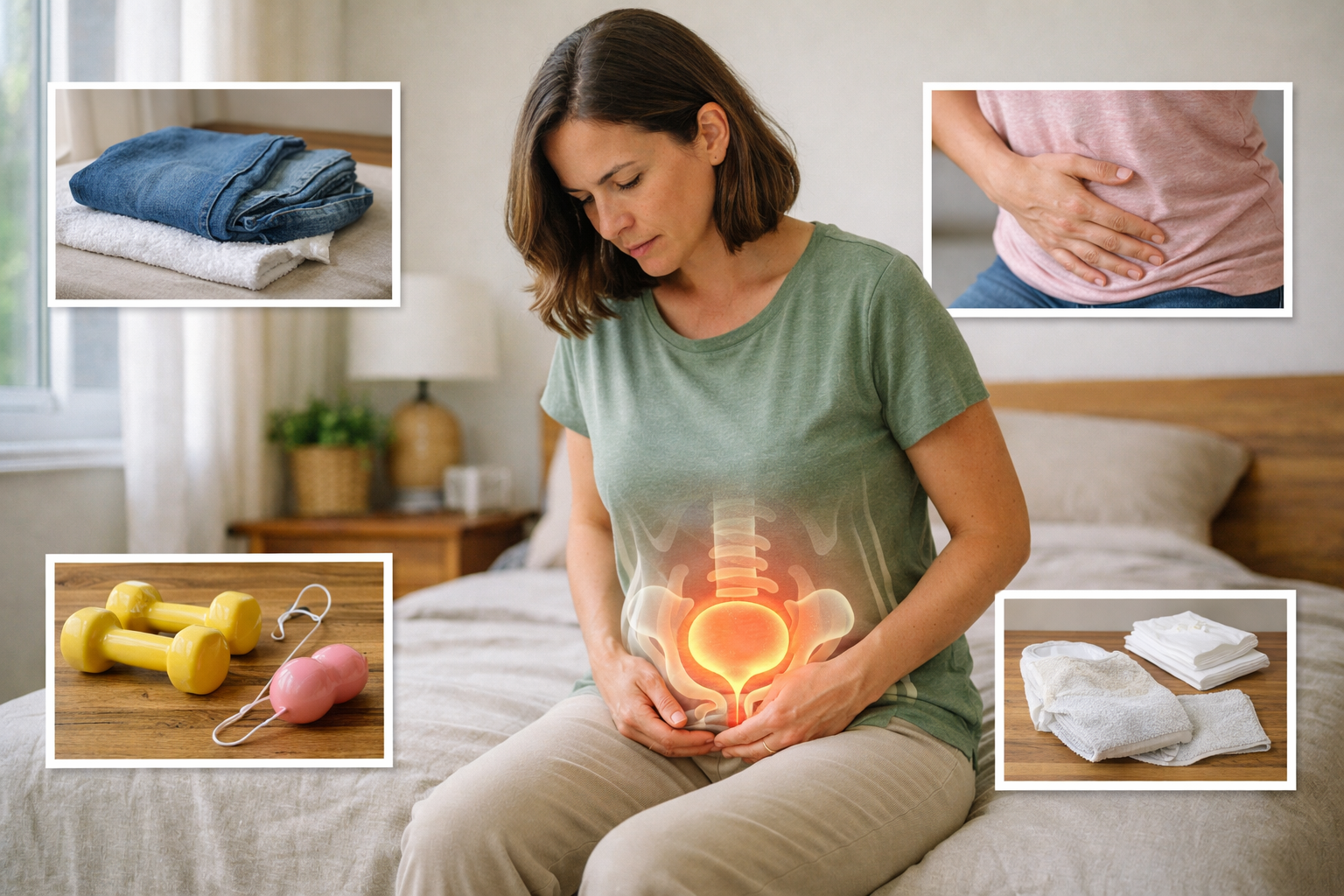
Constipation After Delivery — Why It Keeps Coming Back (And What Actually Fixes It)
By Dr. Sunita Patel (PT) Founder, Pelvicare Health | Pelvic Floor Physiotherapist & Trainer Estimated read time: 8 minutes
You've just brought a new life into the world. You expected sleepless nights, sore breasts, emotional ups and downs. What you didn't expect — what nobody really warns you about — is that going to the toilet would become something you dread.
Straining. The feeling that something is stuck. Pain near your stitches every time you try. The anxiety of sitting there, hoping it will just happen on its own.
If this sounds familiar, I want you to know something first: you are not alone, and this is not your fault.
In my years of working with women as a pelvic floor physiotherapist, postpartum constipation is one of the most common concerns I hear — and one of the most misunderstood. Women are told to eat more fibre, drink more water, take a laxative. And when that doesn't work? They're told to be patient.
But here's what most people — including many doctors — miss: postpartum constipation is very often a pelvic floor problem, not just a digestion problem.
And the good news is, when you address the right cause, things get better. Genuinely, meaningfully better.
What Actually Happens to Your Body After Delivery
Before we talk about constipation specifically, I want you to understand what your body goes through — because the more you understand it, the less confusing (and frightening) your symptoms become.
During pregnancy, your pelvic floor muscles carry the growing weight of your baby for nine months. These muscles — a hammock-like group sitting at the base of your pelvis — support your bladder, uterus, and bowel simultaneously. By the time you reach your third trimester, they are working harder than they ever have.
Then comes delivery.
- In vaginal delivery, these muscles stretch to many times their normal length as your baby passes through. Nerves can be compressed or stretched. Muscles can develop micro-tears. The pudendal nerve — which controls sensation and muscle function in the pelvic floor — can take months to recover full function.
- In C-section delivery, the surgery itself does not directly affect the pelvic floor in the same way — but nine months of pregnancy absolutely does. Additionally, the abdominal muscles are cut and sutured during the procedure. These muscles are essential partners in normal bowel function. When they are weakened or guarded after surgery, the entire system that coordinates a normal bowel movement is disrupted.
- Hormones add another layer. Progesterone, which rises significantly during pregnancy, slows down the digestive system. It takes weeks for these hormone levels to normalise after delivery. Add to this the dehydration from labour, the iron in postnatal supplements (a known constipation trigger), the pain medications given after delivery, and reduced physical movement — and constipation becomes almost inevitable in the short term.
The problem is when it becomes your new normal. That is when the pelvic floor is almost always involved.
Why Your Pelvic Floor Is Likely the Real Cause
Let me explain what should happen when you have a normal bowel movement — because most women have never been taught this.
When you feel the urge to go, your brain sends a signal to your pelvic floor muscles to relax and open. At the same time, your abdominal muscles and diaphragm gently increase pressure to help move stool through. It is a coordinated, involuntary process that your body has done thousands of times without you ever thinking about it.
After delivery, this coordination is frequently disrupted. Here is how:
1. Pelvic Floor Dyssynergia — When Your Muscles Work Against You
This is one of the most common causes of persistent postpartum constipation, and it is almost never diagnosed by a general physician.
Dyssynergia means your pelvic floor muscles are contracting when they should be relaxing. Instead of opening to let stool pass, they tighten — effectively creating a block. You push, they push back. No amount of fibre or water changes this because it is a muscle coordination problem, not a dietary one.
Women with dyssynergia often describe the sensation as straining very hard but feeling like something is in the way. If this resonates with you, please do not ignore it.
2. The Pain and Fear Cycle — A Vicious Loop Nobody Talks About
After a vaginal delivery with stitches or perineal trauma, the idea of passing stool can feel terrifying. You are worried about pain, about tearing something, about making things worse.
So you hold it. You delay going when you feel the urge. You tense up when you do finally sit on the toilet.
Over time, this holding pattern actually trains your pelvic floor to stay tight. The fear creates muscle tension, the tension makes bowel movements harder, which creates more fear. It is a cycle I see constantly in my clinical practice — and it requires both physical and behavioural retraining to break.
3. Weakened Core and Diaphragm Coordination
Your pelvic floor does not work in isolation. It is part of a system that includes your deep abdominal muscles (transversus abdominis), your diaphragm, and the muscles of your lower back. Think of them as a pressure canister — all four walls working together.
After delivery — especially after a C-section — this system loses its coordination. Your body is guarding the surgical site, your breathing patterns change, and the gentle pressure needed to support normal bowel movements becomes inconsistent or ineffective.
This is why I always assess breathing and core function when I see a woman for postpartum constipation. The problem is never just one muscle.
4. Posture and Toilet Position
This one surprises many women — but the position you sit in on the toilet has a direct impact on how easily you can pass stool.
The Western-style toilet puts your body in a position that actually kinks the rectum slightly, making passage harder. The natural human position for defecation is a deep squat — which straightens the anorectal angle and allows stool to pass with minimal effort.
Interestingly, women who use Indian-style squat toilets often have fewer issues with this — it is one rare area where traditional practice aligns perfectly with pelvic floor physiology.
If you use a Western toilet, placing a small footstool (about 20-25 cm) under your feet, leaning slightly forward, and resting your elbows on your knees mimics the squat position and can make an immediate difference.
Signs Your Postpartum Constipation Needs Professional Help
Constipation in the first two weeks after delivery is extremely common and often resolves with basic dietary and hydration adjustments. But you should seek professional help if you experience:
- Straining at every bowel movement, weeks or months after delivery
- A persistent sensation of incomplete emptying — feeling like you haven't fully finished
- Pain or heaviness in the pelvic or rectal area during or after bowel movements
- Needing to use your fingers to support the perineum or vaginal wall to help pass stool (this is called digitation and is a sign of pelvic organ prolapse in some cases)
- A visible or palpable bulge in the vaginal area
- Symptoms that began after delivery and have not improved despite dietary changes
- Fear or anxiety about going to the toilet that is affecting your daily life
- Constipation accompanied by urine leakage, pelvic heaviness, or pain during sex
These are not signs of weakness or something to be embarrassed about. They are clinical signs that your pelvic floor needs targeted rehabilitation — and the sooner you address them, the faster and more complete your recovery will be.
Why Fibre, Water, and Laxatives Are Not Enough
I am not dismissing the basics — fibre and hydration absolutely matter for bowel health. But when pelvic floor dysfunction is the underlying cause, these measures are like putting a plaster over a deeper wound.
If your muscles are not coordinating correctly, adding more bulk to your stool just means more bulk that cannot get through. Stimulant laxatives can actually worsen dyssynergia over time by creating dependency and altering the natural signals your bowel relies on.
I have seen women who were on laxatives for 18 months after delivery. Once we addressed their pelvic floor coordination, they no longer needed them within 8 weeks.
This is not magic. It is the right treatment applied to the right problem.
How Pelvic Floor Physiotherapy Treats Postpartum Constipation
When a woman comes to me with postpartum constipation, here is how I approach it — because I think it helps to know what to expect before you book an appointment.
Step 1 — A Detailed Conversation I spend time understanding your delivery experience, your symptoms, your fears, and your daily habits. There is no rushing. Nothing is too embarrassing to mention. I have heard everything, and I mean that.
Step 2 — Pelvic Floor Assessment With your consent, I assess whether your pelvic floor muscles are weak, tight, or uncoordinated. This tells me exactly what type of treatment you need — because the approach for a tight pelvic floor is the opposite of the approach for a weak one. Getting this wrong is why generic Kegel advice so often fails.
Step 3 — Personalised Treatment Plan
Depending on your assessment, treatment may include:
- Pelvic floor downtraining and relaxation techniques — for women whose muscles are too tight or dyssynergic
- Bowel retraining — re-establishing a regular toilet routine and breaking the fear-holding cycle
- Correct breathing and defecation mechanics — teaching you how to coordinate your breath, core, and pelvic floor for effective, strain-free bowel movements
- Manual therapy — gentle hands-on release of tight muscles or scar tissue, particularly relevant after C-section or perineal trauma
- Postural and positioning advice — including toilet posture, footstool use, and body mechanics throughout the day
- Progressive core rehabilitation — rebuilding the abdominal-diaphragm-pelvic floor coordination system
Most women begin noticing meaningful improvement within 4 to 6 weeks of starting treatment. Complete resolution typically happens within 3 to 4 months, depending on the severity and duration of symptoms.
How Long Does Postpartum Constipation Last?
This is one of the most common questions I receive, and the honest answer is: it depends on the cause.
Hormonal and medication-related constipation in the first 2 weeks typically resolves within a month as your body stabilizes.
Constipation linked to pelvic floor dysfunction — particularly dyssynergia or the pain-fear cycle — will not resolve on its own with time. Without addressing the muscle coordination, symptoms can persist for years. I have worked with women who struggled for 3 to 5 years after delivery before finally receiving a proper assessment.
If your constipation has lasted more than 6 weeks after delivery, please do not wait any longer to seek help.
Constipation After C-Section vs. Vaginal Delivery — Is It Different?
Yes, and it is worth understanding the difference because the treatment emphasis shifts slightly.
After vaginal delivery, the primary concerns are pelvic floor muscle damage, nerve recovery, perineal trauma, and the pain-fear cycle. Treatment focuses heavily on muscle rehabilitation and relaxation.
After C-section, the abdominal scar and abdominal muscle weakness play a larger role. Scar tissue from the incision can create fascial restrictions that affect bowel motility and pelvic floor function indirectly. Abdominal massage around the scar (once healed), breathing rehabilitation, and gentle core reactivation are key parts of treatment.
In both cases, the pelvic floor is involved. The entry point just differs.
Simple Things You Can Start Today
While I always recommend a proper assessment, here are evidence-based steps you can begin right now:
- Use the squat position on the toilet. Place a 20-25 cm footstool under your feet, lean your torso slightly forward, rest elbows on knees. This single change helps many women immediately.
- Never ignore the urge. When your bowel sends the signal, respond within 5-10 minutes. Repeatedly delaying trains your bowel to stop sending the signal and contributes to the holding pattern.
- Breathe, do not strain. When you feel the urge to push, try a gentle exhale through slightly open lips instead of holding your breath and bearing down hard. This coordinates the pelvic floor to open rather than tighten.
- Abdominal massage. Gently massage your abdomen in a clockwise direction for 5 minutes each morning before getting out of bed. This follows the path of the large intestine and can stimulate movement.
- Warm water in the morning. A glass of warm water first thing, before tea or coffee, stimulates the gastrocolic reflex — the natural signal that triggers bowel movement after eating or drinking.
- Move gently. Even short, slow walks around the house stimulate bowel motility. You do not need to exercise vigorously — just move.
A Note From Me, as Both a Physiotherapist and a Woman
I started Pelvicare because I saw too many women told that their postpartum symptoms were normal. Too many women suffering in silence because they were too embarrassed to say, "I'm scared to go to the toilet." Too many women spending months on laxatives when what they actually needed was pelvic floor rehabilitation.
Your body has done something extraordinary. It deserves care that matches that.
Postpartum constipation is common. But struggling with it for months or years without help is not something you should accept. You deserve to feel comfortable in your own body again — and with the right support, you absolutely will.
Frequently Asked Questions
Q: Is constipation after delivery normal? Mild constipation in the first 1-2 weeks after delivery is very common due to hormonal changes, medication, and reduced movement. However, constipation that persists beyond 4-6 weeks, involves straining, incomplete emptying, or pelvic pain is not something to normalise. It is a signal that your body — particularly your pelvic floor — needs targeted support.
Q: Can constipation after delivery be a sign of something serious? In most cases, postpartum constipation is linked to pelvic floor dysfunction, hormonal changes, or lifestyle factors — all of which are treatable. However, if you notice blood in your stool, sudden severe pain, or a bulge at the vaginal opening, please consult a doctor promptly as these can indicate conditions that require medical evaluation beyond physiotherapy.
Q: Does breastfeeding cause constipation? Breastfeeding itself does not directly cause constipation, but it does increase your body's fluid demands. If you are not compensating with adequate water intake, dehydration can contribute to harder stools. Ensure you are drinking at least 2.5 to 3 litres of water daily while breastfeeding.
Q: Can I do pelvic floor exercises at home for postpartum constipation? This depends entirely on your muscle type. If your pelvic floor is already tight or dyssynergic — which is common in constipation — doing Kegel exercises at home could make things worse. Please get a proper pelvic floor assessment before starting any exercises. A physiotherapist will tell you exactly what your muscles need.
Q: How many sessions of pelvic floor physiotherapy will I need? Most women with postpartum constipation see meaningful improvement within 4-6 sessions over 4-6 weeks. More complex cases involving scar tissue, prolapse, or long-standing dysfunction may require 8-12 sessions. Your physiotherapist will give you a personalised timeline after your initial assessment.
Q: Is it too late to seek help if my delivery was years ago? Absolutely not. The pelvic floor responds to rehabilitation at any stage. I regularly work with women who are 3, 5, even 8 years postpartum. The body's capacity to heal and relearn coordination does not have an expiry date.
Q: Can I be seen online for postpartum constipation? Yes. A significant portion of assessment, bowel retraining, breathing rehabilitation, and exercise guidance can be done effectively via online video consultation. Pelvicare offers both online and in-person appointments across Delhi NCR, Mumbai, Bangalore, and Pune.
If You're Ready to Take the Next Step
Postpartum constipation does not get better by waiting. But it does get better with the right care.
At Pelvicare, our women's health physiotherapists are trained specifically in postpartum pelvic floor rehabilitation. Every consultation is private, women-only, consent-based, and completely judgment-free.
[Find a Pelvic Floor Physiotherapist Near You → Click here
Or explore more about postpartum recovery:
Postpartum Recovery & Rehabilitation →
Pelvic Floor & Bladder Health →
Written & Verified by Dr. Sunita Patel (PT)Founder, Pelvicare Health | Pelvic Floor Physiotherapist & Trainer. Pelvicare connects women across Delhi NCR, Mumbai, Bangalore, and Pune with verified women's health physiotherapists specializing in postpartum recovery, pelvic floor rehabilitation, bowel health and other women health realted issues.