Sexual & Intimate Health Rehabilitation

Vaginismus

Book Appointment
Vaginismus

Vaginismus — Pain During Intercourse, Penetration Difficulty & Vaginal Tightness


Written by the Pelvicare Editorial Team

Medically reviewed by Dr. Sunita Patel (PT)

Founder, Pelvicare Health | Pelvic Floor Physiotherapist & Trainer

Last reviewed: April 2026


You have probably been told to just relax. Maybe to try harder. Or that it gets better with time.

It hasn't. And it won't — not without the right help.

What you are experiencing has a name. It is called vaginismus. It is not your fault, it is not in your head, and it is one of the most treatable conditions we see at Pelvicare.

You deserve care that actually understands what you are going through.

Find a Specialist Near You →


What Is Vaginismus?

Vaginismus is when the muscles around your vaginal opening tighten involuntarily — the moment penetration is attempted or even anticipated. Not because you don't want intimacy. Not because something is permanently wrong with you. Your body has simply learned to protect itself, and that protection has become a barrier.

It can make intercourse painful or impossible. It can make tampon use unbearable. It can make gynaecological exams something you avoid for years.

And in India, most women who experience it never find out it has a name — let alone that it can be treated.

You are not broken. You are not alone. And you can get better.


Primary or Secondary — Which One Are You?

Primary vaginismus — penetration has never been comfortable, from the very first attempt. Intercourse, tampons, gynaecological exams — all feel impossible or intensely painful.

Secondary vaginismus — you were fine before. Then something changed — childbirth, an infection, a difficult medical procedure, menopause, or a painful experience — and your body started responding differently.

Both types are real. Both types are treatable. The starting point is simply understanding which one you have.

There is also a third pattern many women don't talk about — menopausal vaginismus, where falling oestrogen levels cause tissue changes that trigger pain, which then triggers the muscle response. If you are perimenopausal or postmenopausal and intercourse has become painful, this may be why. Our Menopause Care team can help


Does This Sound Like You?

  • Intercourse feels like hitting a wall — or simply isn't possible
  • Tampon use is painful or you've given up trying
  • You dread pelvic exams and often leave with them incomplete
  • You feel physically aroused but your body won't allow penetration
  • You've been told to "just relax" — and it hasn't helped
  • You've been carrying this in silence for months or years

If you're nodding — this is vaginismus, and Pelvicare can help.

Find a Vaginismus Specialist →


Why Does Vaginismus Happen?

Your pelvic floor has learned to guard. The reasons vary — and they don't always include trauma, despite what many people assume.


For many Indian women, the causes are deeply tied to context. Growing up without accurate information about their own bodies. Being told that first-time sex is painful — sometimes by mothers, friends, or wedding night "advice" that created fear before any attempt was made. Having gynaecological exams that felt rushed, uncomfortable, or humiliating.


None of this is your fault. All of it can be unlearned.

Other common triggers include recurrent infections, childbirth trauma, endometriosis, hormonal changes, or sometimes — no clear reason at all. The nervous system doesn't always need a dramatic event to develop a protective response. It just needs enough reason to feel unsafe.


Whatever your reason — your experience is valid and your recovery is possible.


How Pelvicare Treats Vaginismus

Pelvic floor physiotherapy is the most effective, evidence-based treatment for vaginismus — with success rates above 80 to 90% when delivered by trained specialists.

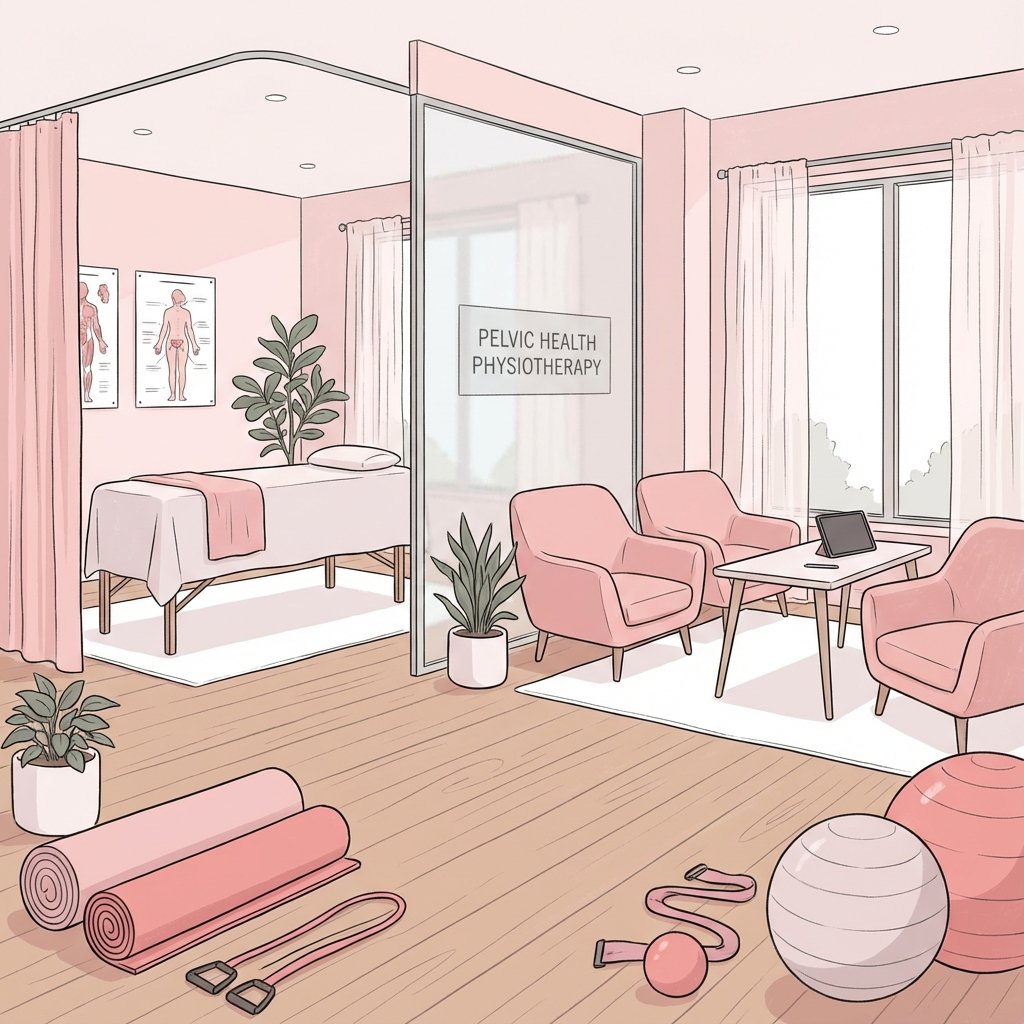
At Pelvicare, treatment is always women-only, consent-based at every single step, and paced entirely by you — nothing before you are ready.


First, a real conversation. Your specialist will listen — to your history, your fears, your goals. Whether you want to be able to use a tampon, have a comfortable gynaecological exam, have penetrative intercourse, or start a family. No judgment. No rushing.

Then, when you are ready — a gentle assessment. To understand what your pelvic floor muscles are doing and why. Internal assessment only happens with your full consent and never in the first session if you're not ready.


Then, a plan built entirely around you. Which may include:

  • Pelvic floor relaxation and downtraining
  • Breathing and nervous system calming techniques
  • Education about your anatomy — which alone reduces anxiety significantly
  • Graded desensitisation — starting with the least threatening step and slowly building
  • Vaginal trainer (dilator) programme, guided by your specialist
  • Manual therapy to release tight pelvic floor muscles
  • Partner guidance where helpful and desired

Most women begin to feel a difference — less fear, more control — within the first few sessions. Full recovery for most women happens within 3 to 6 months.

Start Your Recovery →


What the Research Shows

  • Vaginismus affects 5 to 17% of women globally — and is significantly underreported in India
  • Pelvic floor physiotherapy has success rates of 80 to 90% for vaginismus (Journal of Sexual Medicine)
  • Most women with vaginismus do not have a history of sexual trauma — it can develop without any identifiable cause
  • Women wait an average of 3 to 7 years before seeking treatment — you don't have to be one of them
  • Vaginismus does not prevent pregnancy — most women achieve natural conception after treatment


Vaginismus Treatment Across India

Pelvicare has verified women's health physiotherapists treating vaginismus across:

Delhi NCR — South Delhi, Gurgaon, Noida, Dwarka, Faridabad. In-person and online. Mumbai — Bandra, Andheri, Powai, Thane, Navi Mumbai. In-person and online. Bangalore — Koramangala, Indiranagar, Whitefield, HSR Layout, Jayanagar. In-person and online. Pune — Baner, Kothrud, Viman Nagar, Aundh, Koregaon Park. In-person and online.


Online consultations available for women across all cities in India.

Every appointment is women-only, listed as a "Wellness Consultation" for complete privacy, and paced entirely by you.

Find a Specialist in Your City →


Also explore related conditions:


Questions Women Ask About Vaginismus


Can vaginismus be permanently cured?

Yes. With pelvic floor physiotherapy, more than 80 to 90% of women achieve full resolution — including pain-free penetration. It is one of the most treatable pelvic floor conditions. Find a specialist near you →


Does vaginismus mean I was sexually traumatised?

No. Most women with vaginismus have no history of sexual trauma. Vaginismus can develop from fear, cultural messaging, painful medical experiences, or sometimes without any clear cause. Your experience is valid regardless.


Why does intercourse hurt even though I want it?

Because vaginismus is involuntary. The muscle response happens independently of your desire — it is your nervous system protecting you, not a reflection of how you feel about your partner or intimacy.


Will I need an internal examination at my first appointment?

No — not unless you want one. Your first session is a conversation. Internal assessment only happens when you are completely ready and have explicitly consented. Your pace. Always.


Can I get pregnant if I have vaginismus?

Yes. Vaginismus affects penetration, not fertility. Most women with vaginismus conceive naturally after treatment. Learn more about pelvic pain associated with infertility →


How long does vaginismus treatment take?

Most women notice real progress within 4 to 8 sessions. Full recovery typically takes 3 to 6 months. The earlier you start, the faster your recovery.


Is online vaginismus treatment effective?

Yes. Education, nervous system techniques, breathing, pelvic floor downtraining, and guided dilator programmes can all be delivered effectively online. Pelvicare offers online consultations for women across all cities in India.


Where can I find a vaginismus specialist in India?

Pelvicare has verified specialists in Delhi NCR, Mumbai, Bangalore, and Pune — with online consultations available across all of India. Every consultation is women-only and completely private.


This content has been clinically reviewed and approved by Dr. Sunita Patel (PT), Founder of Pelvicare Health, with 16+ years of experience in women's pelvic floor physiotherapy. Last reviewed April 2026.

Ready to Take the Next Step?

Schedule a consultation to discuss your specific needs.

Book Appointment